Volume: 11 Issue: 2 , 7/26/23

Year: 2023

Research Article

Review

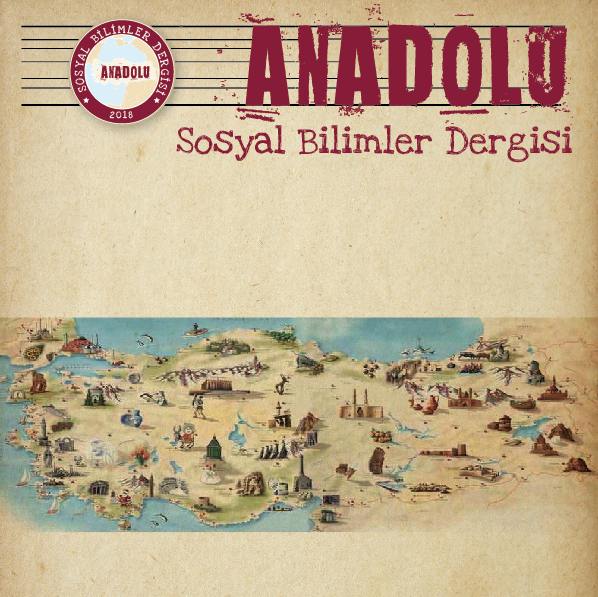
Asia Minor Studies Journal, which includes original studies in the field of social sciences on Anatolia (Asia Minor), one of the oldest settlements in world history, is an international peer-reviewed journal. 

Only original scientific studies written in the field of social sciences on the history, language, literature, geography and economy of the states established in Anatolia (Asia Minor) from ancient times to the present are included in the AMS-Journal. Our journal is published at least twice a year (January and July).

Turkish and English publications are accepted.

Introduction
You can use the template in which you can change your Introduction, Literature Review and Conclusion from the gallery section. The text starts right after Abstract. Introduction, Literature Review and Conclusion has to be Times New Roman, 12-point size, aligned on two sides, 1.25 cm space at the beginning of each paragraph.

Giving a 6nk space between paragraphs is very important. Click on the "Paragraph" heading in the right menu and set 6nk up and below. From the style section above, select the Journal Body style for paragraphs.

If quotations are longer than three lines, they must be written in the block quote style, from the left without quotation marks:
Each quote longer than three lines and / or 40 words must be written in the block quote style, aligned on two sides, all in 1.25 cm inside, 10-point size. A space of 6nk or 6pt will be found within the text below. (Smith, 1990, pp. 123)
It can be given as Smith (1990). It should be noted that in APA style, page number abbreviation is necessary.

Title Does Not Start with Numbers (1st Level)

Left Justified Header 12-point size Bold Initial Letters Capitalized (2nd Level)

Indented 12-point size bold, only first word capitalized (3rd Level)

Indented 12-point size bold italicized and only first word capitalized (4th Level)

Indented, italic, first word of head starts with capital letter and other words begin with lower case (5th Level)

When using Tables and Figures, apply the following writing rules!
Table 1: After the number of the table, put a colon, not a full stop. All explanatory text is 10-point size, title part is bold, and the rest is not. It is not necessary to give 6nk space between the paragraphs, tables, and figures.


    Figures, pictures, graphics and photographs should be placed at the bottom, 10-point size, the title should be bold and the rest should be normal. Leave 6nk space between the figures/ tables and paragraphs.

Figure 1: Kilis 7 Aralık University

References
Books

In the "References", the surname of the author, the initials of the first name (sometimes the first two names), the year of publication (in brackets), the name of the work, publication information is written separated with full stops. Book titles are written entirely in lower case after the first letter of the heading (except for special names) and italicized.

Single author or edited book

Surname of the Author, Initials of the Author's Name. (Year). The title of the book is italic, and after the first letter (except for special names) is entirely in lower case. Place of printing: Publisher. Editor's Last Name, Editor's First Name. (Ed.). (Year). The title of the book is italic, and after the first letter (except for special names) the rest is entirely in lower case. Place of printing: Publisher.

Two or more authors or edited books

First Author's Surname, Initials of the First Author's First Name. and Second Author's Surname, Initials of the Second Author's First Name. (Year). The title of the book is italic, and after the first letter (except for special names) the rest is entirely in lower case. Place: Publisher.

Edited or extended editions

Surname of the Author, Initials of the Author's Name. (Year). The title of the book is italic, and after the first letter (except for special names) the rest is entirely in lower case (x / x extended edition). Place of printing: Publisher.

Books without author(s)

The title of the book is italic, and after the first letter (except for special names) the rest is entirely in lower case. (Year). Place: Publisher.

Books consisting of two or more volumes

Surname of the Author, Initials of the Author's Name. (Year). The title of the book is italic, and after the first letter (except for special names) the rest is entirely in lower case (x. volume) Place of printing: Publisher.

Translated books

Surname of the Author, Initials of the Author's Name. (Year). The title of the book is italic, and after the first letter (except for special names) the rest is entirely in lower case. (First Name of Translator's Name, Translator's Last Name, Trans.) Place of printing: Publisher.

Compilation Articles

Surname of the Author, Initials of the Author's Name. (Year). The title of the article. The title of the book is italicized and after the first letter (except for special names) the rest is in lower case (pp. page number range). Place of printing: Publisher.

A text or section in compilation

Surname of the Author, Initials of the Author's Name. (Year). The title of the article. The initials of the Editor's Name. The last Name of the Editor (Ed.), The title of the book is italic, and after the first letter (except for special names) the rest is in lower case (pp. page number range). Place of printing: Publisher.

Section or text in the reference books

Surname of the Author, Initials of the Author's Name. (Year). The title of the article. The title of the book is italicized and after the first letter (except for special names) the rest is in lower case (pp. page number range). Place of printing: Publisher.
Example:
Biber, D. (2006). University Language: A corpus-based study of spoken and written registers. Amstersam, Philadelphia: John Benjamins.
Cortes, V. (2002). Lexical bundles in freshman composition. In R. Reppen, S. M. Fitzmaurice and D. Biber (Eds), Using Corpora to Explore Linguistic Variation, 131-145: Amsterdam, Philadelphia: John Benjamins.
Biber, D., Johansson, S., Leech, G., Conrad, S. & Finegan, E. (1999). Longman grammar of spoken and written English. London: Longman.

Articles

For Journal Articles

Surname of the Author, Initials of the Author's Name. (Year, if any month). The name of the article, only the first letter of the first word is small if the rest are not private names. Journal Title is Italic and The First Letters of each Word is capital, Volume Italic (Number), Page Number range. doi: X
Example:
Cortes, V. (2008). A comparative analysis of lexical bundles in academic history writing in English and Spanish. Corpora, 3, 43-57.
Conrad, S. & Biber, B. (2004). The frequency and use of lexical bundles in conversation and academic prose. LEXICOGRAPHICA, 20, 56-71.

Other Resources

Films

Surname of the Director, Initials of the Director's Name. (Director). (Year). Name of the film is italic. Production city: The name of the production company.

Internet resources

Surname of the Author, Initials of the Author's Name. (Date of publication of the manuscript). The name of the article is italicized, only the first letter of the first word is capital, if the rest are not private names, they are not capital. Access date: Day Month Year, post link.

Unpublished masters / doctoral dissertations

Surname of the Author, Initials of the Author's Name. (Year). The title of the dissertation is italicized, only the first letter of the first word is capital, if the rest are not private names they are not capital (Unpublished Master / PhD Thesis). Name of Institution, Place of Institution.
Example:
Bal, B (2010). Analyses of Four Word lexical bundles in published research articles written by Turkish scholars. Unpublished Master’s Thesis. Georgia State University, Georgia. Retrieved 5 July 2011 from: http://digitalarchive.gsu.edu/alesl_theses/2

Publication Policy
The journal is committed to upholding the highest standards of publication ethics and pays regard to Principles of Transparency and Best Practice in Scholarly Publishing published by the Committee on Publication Ethics (COPE), the Directory of Open Access Journals (DOAJ), the Open Access Scholarly Publishers Association (OASPA), and the World Association of Medical Editors (WAME) on https://publicationethics.org/resources/guidelines-new/principles-transparency-and-best-practice-scholarly-publishing

The subjects covered in the manuscripts submitted to the Journal for publication must be in accordance with the aim and scope of the Journal. Only those manuscripts approved by every individual author and that were not published before in or sent to another journal, are accepted for evaluation.

Changing the name of an author (omission, addition or order) in papers submitted to the Journal requires written permission of all declared authors.
Plagiarism, duplication, fraud authorship/denied authorship, research/data fabrication, salami slicing/salami publication, breaching of copyrights, prevailing conflict of interest are unethical behaviors. All manuscripts not in accordance with the accepted ethical standards will be removed from the publication. This also contains any possible malpractice discovered after the publication.

Plagiarism
Asia Minor Studies Journal complies with the ethical rules in the acceptance and publication of manuscripts.iThenticate program is used to check plagiarism. Manuscripts with more than 20 percent excerpt and overlapping with other publications without proper citation are not reviewed and immediately rejected.

Double Blind Peer-Review
After plagiarism check, the eligible ones are evaluated by the editors-in-chief for their originality, methodology, the importance of the subject covered and compliance with the journal scope. The editor provides a fair double-blind peer review of the submitted articles and hands over the papers matching the formal rules to at least two national/international referees for evaluation and gives green light for publication upon modification by the authors in accordance with the referees’ claims.

Duties of Editors
Fair play and editorial independence
Editors evaluate submitted manuscripts exclusively on the basis of their academic merit (the importance and contribution of the work, its originality, and the validity of study’s findings and methods, and the clarity of its language) and its relevance to the journal’s scope, without regard to the authors’ race, gender, sexual orientation, ethnic origin, citizenship, religious belief, political philosophy or institutional affiliation. Decisions to edit and publish are not determined by the policies of governments or any other agencies outside of the journal itself. The Editor-in-Chief has complete and unhindered authority over the entire editorial content of the journal and the timing of publication of that content.
ASIA MINOR STUDIES and its editors are duty bound to evaluate submitted manuscripts only in terms of their academic qualities, i.e., the importance of the submitted work in its own field, the originality of the article, the validity of research, and the clarity of manuscripts. The journal’s academic scope is the only measure in the selection. The authors’ race, gender, citizenship, religious belief, political philosophy and/or institutional affiliation absolutely plays no role in the decision-making process.

Confidentiality
Editors and editorial staff will not disclose any information about a submitted manuscript to anyone but the corresponding author, reviewers, potential reviewers, other editorial advisers, and the publisher. The decision to confer with the aforementioned actors lies solely with the Editor-in-Chief.
Disclosure and conflicts of interest
Editors and editorial board members will not use information contained in the submissions to their own benefits, this includes their research, ongoing work, collaborations, etc. without the open written consent given by the author.
Editors will excuse themselves from pre-reviewing and reviewing manuscripts in which they have conflicts of interest resulting from competitive, collaborative, or other relationships/connections with any of the authors, companies or institutions connected to the papers. If a conflict arises of such nature, the editors will ask another member of the editorial board to handle the manuscript.

Publication decisions
The editors and the publisher formally assure that all submitted manuscripts being considered for publication undergo peer-review by at least two reviewers who are specialists in their field. After the completion of the review process, the Editor-in-Chief is responsible for deciding which of the manuscripts submitted to the journal will be published, based on the validation of the work in question, its importance to researchers and readers, the reviewers’ comments, and such legal requirements as are currently in force regarding libel, copyright infringement and plagiarism. The Editor-in-Chief may get advice from other editors or reviewers in making this decision.

Involvement and cooperation in investigations
Editors, in conference with the Publisher, assures that every reported act of unethical publishing behaviour will be looked into, even if it is discovered years after publication. The journal editors will follow the COPE procedures when dealing with cases of suspected misconduct. After the investigation if an ethical concern is found to be corroborated by actual evidence, a erratum, retraction, expression of concern or other relevant statement will be published in the journal.

Duties of Reviewers
Contribution to editorial decisions
Peer review is the founding mechanism of academic endeavor. Peer review helps editors make decisions in dialogue with authors. Authors gain important insights about their works and find the chance to develop their work by dint of criticism ensconced in the reviewers’ reports and comments.

Promptness
A referee invited for review should immediately report on his/her availability and those who feel unqualified to review the research should inform the editor about their decisions as soon as possible.

Confidentiality
Manuscripts delivered to the referees should be treated as confidential documents. The manuscripts should not be shown to others, nor their contents should be discussed publicly. Only under the explicit authorization by the Editor-in-Chief a reviewer can seek advice from her colleagues. The Editor-in-Chief will give this permission only under exceptional conditions. This rule also concerns the persons who declined to take part in the process as a referee.

Standards of objectivity
Personal critiques oriented towards the manuscripts’ authors is not an appropriate manner of conduct. Reviews should follow an objective procedure in their reports and upon the acceptance of referee duty they accept that their comments are evidently supported by arguments that is of help to the authors in improving their work.

Acknowledgement of sources
Reviewers have a duty to report to the authors any published work that is not part of the authors’ references. A reviewer should pay particular attention to the works in the field that are not cited by the authors, or overlaps between different works. A reviewer should notify the editors regarding similarity with any other previously published work, or other manuscripts they have a knowledge of.

Disclosure and conflicts of interest
Any invited referee who has conflicts of interest resulting from competitive, collaborative, or other relationships or connections with any of the authors, companies or institutions connected to the manuscript and the work described therein should immediately notify the editors to declare their conflicts of interest and decline the invitation to review so that alternative reviewers can be contacted.
Unpublished material disclosed in a submitted manuscript must not be used in a reviewer’s own research without the express written consent of the authors. Privileged information or ideas obtained through peer review must be kept confidential and not used for the reviewer’s personal advantage. This applies also to invited reviewers who decline the review invitation.

Duties of Authors
Authors of original research should present an accurate account of the work performed and the results, followed by an objective discussion of the significance of the work. The manuscript should contain sufficient detail and references to permit others to replicate the work. Review articles should be accurate, objective and comprehensive, while editorial 'opinion' or perspective pieces should be clearly identified as such. Fraudulent or knowingly inaccurate statements constitute unethical behaviour and are unacceptable.

Data access and retention
Authors may be asked to provide the raw data of their study together with the manuscript for editorial review and should be prepared to make the data publicly available if practicable. In any event, authors should ensure accessibility of such data to other competent professionals for at least 10 years after publication (preferably via an institutional or subject-based data repository or other data centre), provided that the confidentiality of the participants can be protected and legal rights concerning proprietary data do not preclude their release.

Originality and plagiarism policy
Authors should ensure that they have written and submit only entirely original works, and if they have used the work and/or words of others, that this has been appropriately cited. Publications that have been influential in determining the nature of the work reported in the manuscript should also be cited. Plagiarism takes many forms, from "passing off" another's paper as the author's own, to copying or paraphrasing substantial parts of another's paper (without attribution), to claiming results from research conducted by others. Plagiarism in all its forms constitutes unethical publishing behaviour and is unacceptable.
All manuscripts are subject to online scrutiny by means of Turnitin. Any paper with a Turnitin score above 20% originality -including references and block quotes- will be rejected barring any further submissions. Manuscripts checked via Turnitin are not submitted to the online repositories. All authors accept their responsibilities and the editorial staff will take further precautions to prevent plagiarism in case Turnitin does not bring yield satisfactory results. Since the Turkish database is limited, we will take other means, including but not limited to Crossref, ithenticate, and/or Google search.
However, 20% threshold does not entail editors' automatic response would be positive, any breach of academic code of conduct, including, but not limited to misquote, misrepresent, and failure to properly cite sources, would end up in rejection and/or extensive revision.

Multiple, duplicate, redundant or concurrent submission/publication
Papers describing essentially the same research should not be published in more than one journal or primary publication. Hence, authors should not submit for consideration a manuscript that has already been published in another journal. Submission of a manuscript concurrently to more than one journal is unethical publishing behaviour and unacceptable.
The publication of some kinds of articles (such as clinical guidelines, translations) in more than one journal is sometimes justifiable, provided that certain conditions are met. The authors and editors of the journals concerned must agree to the secondary publication, which must reflect the same data and interpretation of the primary document. The primary reference must be cited in the secondary publication.

Authorship of the manuscript
Only persons who meet these authorship criteria should be listed as authors in the manuscript as they must be able to take public responsibility for the content: (i) made significant contributions to the conception, design, execution, data acquisition, or analysis/interpretation of the study; and (ii) drafted the manuscript or revised it critically for important intellectual content; and (iii) have seen and approved the final version of the paper and agreed to its submission for publication. All persons who made substantial contributions to the work reported in the manuscript (such as technical help, writing and editing assistance, general support) but who do not meet the criteria for authorship must not be listed as an author, but should be acknowledged in the "Acknowledgements" section after their written permission to be named as been obtained. The corresponding author should ensure that all appropriate coauthors (according to the above definition) and no inappropriate coauthors are included in the author list and verify that all coauthors have seen and approved the final version of the manuscript and agreed to its submission for publication.

Disclosure and conflicts of interest
Authors should—at the earliest stage possible (generally by submitting a disclosure form at the time of submission and including a statement in the manuscript)—disclose any conflicts of interest that might be construed to influence the results or their interpretation in the manuscript. Examples of potential conflicts of interest that should be disclosed include financial ones such as honoraria, educational grants or other funding, participation in speakers’ bureaus, membership, employment, consultancies, stock ownership, or other equity interest, and paid expert testimony or patent-licensing arrangements, as well as non-financial ones such as personal or professional relationships, affiliations, knowledge or beliefs in the subject matter or materials discussed in the manuscript. All sources of financial support for the work should be disclosed (including the grant number or other reference number if any).

Acknowledgement of sources
Authors should ensure that they have properly acknowledged the work of others, and should also cite publications that have been influential in determining the nature of the reported work. Information obtained privately (from conversation, correspondence or discussion with third parties) must not be used or reported without explicit, written permission from the source. Authors should not use information obtained in the course of providing confidential services, such as refereeing manuscripts or grant applications, unless they have obtained the explicit written permission of the author(s) of the work involved in these services.

Peer review
Authors are obliged to participate in the peer review process and cooperate fully by responding promptly to editors’ requests for raw data, clarifications, and proof of ethics approval, patient consents and copyright permissions.
If a decision is made asking for a "revise and resubmit," authors accept their responsibility in answering the criticism voiced in the reviewer form and should respond to the reviewers’ comments systematically, point by point, and in a timely manner, revising and re-submitting their manuscript to the journal by the deadline given.
Fundamental errors in published works
It is the authors' prerogative to discover significant errors or inaccuracies in their own published work. If such an issue is discovered, the author(s) are expected it is their obligation to promptly notify the journal’s editors or publisher and cooperate with them to either correct the paper in the form of an erratum or to retract the paper. If the editors or publisher learns from a third party that a published work contains a significant error or inaccuracy, then it is the authors’ obligation to promptly correct or retract the paper or provide evidence to the journal editors of the correctness of the paper. 

Fundamental errors in published works
It is the authors' prerogative to discover significant errors or inaccuracies in their own published work. If such an issue is discovered, the author(s) are expected it is their obligation to promptly notify the journal’s editors or publisher and cooperate with them to either correct the paper in the form of an erratum or to retract the paper. If the editors or publisher learns from a third party that a published work contains a significant error or inaccuracy, then it is the authors’ obligation to promptly correct or retract the paper or provide evidence to the journal editors of the correctness of the paper. 


Journal is free

Publisher & Owner

Serhat Kuzucu
Assoc. Prof. Dr. Serhat KUZUCU KİLİS 7 ARALIK ÜNİVERSİTESİ
Early Modern Ottoman History, Ottoman history

Section Editors

Bilal Görentaş
Asst. Prof. Dr. Bilal GÖRENTAŞ Kilis 7 Aralık Üniversitesi


Bilal Görentaş is a faculty member in the Department of Geography at Kilis 7 Aralık University. He completed his undergraduate studies at Yüzüncü Yıl University, followed by a master's degree in Human Geography at Durham University and a Ph.D. in the same field at the University of Southampton. His academic interests include cultural studies, migration, nationalism, border studies, and research methods
Human Geography, Ecology, Sustainability and Energy, Cultural Geography, Political Geography, Social Geography, Middle East Studies, International Migration
Osman Taşkın
Assoc. Prof. Dr. Osman TAŞKIN Kilis 7 Aralık Üniversitesi Web

Doktora:  Mimar Sinan Güzel Sanatlar Üniversitesi (Yeniçağ Tarihi)

Y.Lisans: Cumhuriyet Üniversitesi (Yakınçağ Tarihi)

Lisans:   Anadolu Üniversitesi Fen Edebiyat Fakültesi Tarih Bölümü

Lisans:  Anadolu Üniversitesi İktisat Fakültesi Siyaset Bilimi ve Kamu Yönetimi


Architectural, General Turkish History (Other), Ottoman Institutions and Civilization, History of Ottoman Socio-Economy, Ottoman Society, Late Modern Urban History, Early Modern Urban History, Urbanization History
Default avatar
Assoc. Prof. Dr. Mehmet ALPTEKİN KİLİS 7 ARALIK ÜNİVERSİTESİ
Turkish Language and Literature
Default avatar
Asst. Prof. Dr. Hasan ASADİ Erdebil Üniversitesi
Contemporary History of Iran
New Turkish Language (Turkish of Old Anatolia, Ottoman, Turkiye)
History of Central Asia
Medieval European History
Default avatar
Prof. Dr. Orlin SABEV Institute for Balkan Studies, Bulgarian Academy of Sciences
Medieval European History
Default avatar
Assoc. Prof. Dr. Paschalis ANDROUDİS Aristotle University of Thessaloniki
Urbanization History
History Education
Medieval Cities
İryna Dryga
Assoc. Prof. Dr. İryna DRYGA İSTANBUL ÜNİVERSİTESİ, EDEBİYAT FAKÜLTESİ
New Turkish Language (Turkish of Old Anatolia, Ottoman, Turkiye)
Milena Petkova-roberg
Dr. Milena PETKOVA-ROBERG Sofia University "St. Kliment Ohridski"

Assoc. Prof.  Dr. Milena Petkova-Roberg is a graduate of Sofia university “St. Kliment Ohridski” and at present is an Assoc. Prof. at the Department of Bulgarian History, Faculty of History at the university St. “Kliment Ohridski”. She has specialized at the American Research Institute in Turkey, 2011 (Istanbul) and with experience in the field of international relations being International officer at the State Archives Agency of Bulgaria. At present she is taking the position of Vice-Dean at the Faculty of History, Sofia University “St. Kliment Ohridski”, with main fields of interest in Ottoman economic and demographic history during the Early modern times.

Late Modern Balkan History
Necdet Yaşar Bayatlı
Prof. Dr. Necdet Yaşar BAYATLI It is not affiliated with an institution
World Languages, Literature and Culture
New Turkish Language (Turkish of Old Anatolia, Ottoman, Turkiye)
Default avatar
Assoc. Prof. Dr. Alim ABIDULIN N.I. Lobachevsky State University of Nizhny Novgorod
Political Geography in Political History
South-West (Oghuz) Turkic Dialects and Literatures

Advisory Board

Sadettin Paksoy
Prof. Dr. Sadettin PAKSOY GAZİANTEP ÜNİVERSİTESİ
Makro İktisat, Tarım Ekonomisi, Turizm Ekonomisi, Avrupa Birliği
International Corporation
Default avatar
Prof. Dr. Mehmet Emin SÖNMEZ GAZİANTEP ÜNİVERSİTESİ
Rural and Regional Geography
Default avatar
Prof. Dr. Enver ÇAKAR FIRAT ÜNİVERSİTESİ
Early Modern Urban History
Mehmet Erol
Prof. Dr. Mehmet EROL GAZİANTEP ÜNİVERSİTESİ Web
Turkish Folklore
Default avatar
Prof. Dr. Ruhi ERSOY ANKARA HACI BAYRAM VELİ ÜNİVERSİTESİ
Turkish Folklore
Default avatar
Prof. Dr. Metin AKİS KİLİS 7 ARALIK ÜNİVERSİTESİ
Ottoman Institutions and Civilization
Default avatar
Assoc. Prof. Dr. Uğur DEMİR MARMARA ÜNİVERSİTESİ
Ottoman Institutions and Civilization
Taner Akçacı
Prof. Dr. Taner AKÇACI Gaziantep Üniversitesi
Regional Economy
Default avatar
Assoc. Prof. Dr. Fatih Mehmet SANCAKTAR It is not affiliated with an institution

1975-1986 yılları arasında İlk, Orta ve Lise eğitimini Zonguldak’ta tamamladı. 1992’de İstanbul Üniversitesi Edebiyat Fakültesi Tarih Bölümünü bitirdikten sonra aynı üniversitede 1996’da Said Molla ve Türkçe İstanbul Gazetesi adlı çalışmasıyla Yüksek Lisansını, 2005’te II. Meşrutiyet’ten Cumhuriyet’e Milli Egemenlik Düşüncesinin Gelişimi: Hüseyin Cahit (Yalçın) Örneği isimli araştırmasıyla Doktora eğitimimi tamamladı. İstanbul Üniversitesi Edebiyat Fakültesi Tarih Bölümü, Türkiye Cumhuriyete Tarihi Anabilim Dalı’nda akademik hayatını devam ettirmektedir.
II. Meşrutiyet’ten Cumhuriyet’e Milli Hakimiyet Düşüncesinin Gelişimi Hüseyin Cahit Yalçın Örneği (1908-1925) ve Hiss-i Milliden Harbi İktisadiye Yunan Boykotu (1909-1911), Osmanlı’dan Cumhuriyet’e Anayasa, Seçim ve Meclis Tecrübesi (1876-1923), adlı kitapları ve kitap bölüm yazarlıkları, editörlükleri ve değişik dergilerde yayınlanan makaleleri bulunmaktadır.

Turkish Foreign Policy
Default avatar
Assoc. Prof. Dr. Murat FİDAN KASTAMONU ÜNİVERSİTESİ, İKTİSADİ VE İDARİ BİLİMLER FAKÜLTESİ
History of European Economy
Default avatar
Prof. Dr. Pınar ÜLGEN TOKAT GAZİOSMANPAŞA ÜNİVERSİTESİ
Medieval History
Ozan Yılmaz
Prof. Dr. Ozan YILMAZ Sakarya Üniversitesi Web
Old Turkic Language (Orhon, Uyghur, Karahan)
Default avatar
Prof. Dr. Mustafa ÖZTÜRK İZMİR DEMOKRASİ ÜNİVERSİTESİ, FEN-EDEBİYAT FAKÜLTESİ
History of Ottoman Economy
Default avatar
Prof. Dr. Nurullah ÇETİN ANKARA ÜNİVERSİTESİ, DİL VE TARİH COĞRAFYA FAKÜLTESİ, TÜRK DİLİ VE EDEBİYATI BÖLÜMÜ, YENİ TÜRK EDEBİYATI PR.
Modern Turkish Literature in Turkiye Field
Ayşe Kayapınar
Prof. Dr. Ayşe KAYAPINAR Milli Savunma Üniversitesi

BAŞ EDİTÖR

Late Modern Balkan History
Ökkeş Narinç
Assoc. Prof. Dr. Ökkeş NARİNÇ Namık Kemal Üniversitesi Web

EDİTÖR

Late Modern Balkan History
History of The Republic of Turkiye
Muhsin Halis
Prof. Dr. Muhsin HALİS Kocaeli University
International Corporation
Yunus Emre Tansü
Assoc. Prof. Dr. Yunus Emre TANSÜ GAZİANTEP üNİVERSİTESİ
General Turkish History

English Language Editor

Gülten Silindir Keretli
Res. Assist. Gülten SİLİNDİR KERETLİ Kilis 7 Aralık Üniversitesi Web
British and Irish Language, Literature and Culture

Turkish Language Editor

Default avatar
Asst. Prof. Dr. Armağan ZÖHRE HOCA AHMET YESEVİ ULUSLARARASI TÜRK-KAZAK ÜNİVERSİTESİ
New Turkish Language (Turkish of Old Anatolia, Ottoman, Turkiye)

Layout Editors

Mustafa Koyuncu
Res. Assist. Mustafa KOYUNCU Kilis 7 Aralık Üniversitesi / İnsan ve Toplum Bilimleri Fakültesi / Tarih Bölümü
Early Modern Military History, Early Modern Ottoman History, Ottoman history

Publisher & Owner

Serhat Kuzucu
Prof. Dr. Serhat KUZUCU KİLİS 7 ARALIK ÜNİVERSİTESİ
Early Modern Military History

Chief Editors

Abdullah Bayındır
Asst. Prof. Dr. Abdullah BAYINDIR KİLİS 7 ARALIK ÜNİVERSİTESİ

Abdullah Bayındır completed his undergraduate studies in 2009 at the Department of History, Faculty of Arts and Sciences, Gaziantep University. In 2010, he began his master’s studies at the Institute of Social Sciences, Department of General Turkish History, at the same university, and completed his degree with a thesis entitled “The Transcription and Evaluation of the Work ‘Piyade Sınıfına Mahsus Dâhiliyye ve Seferiyyeden Mevâdd-i Mücmeleyi Hâvî Ma‘lûmât ve Terbiye-i Askeriyye’.”
In 2013, Bayındır enrolled in the doctoral program in the Department of Medieval History at the Institute of Social Sciences, Gaziantep University, and earned his PhD in 2017 with his dissertation entitled “Succession Struggles in the Seljuk State.”
Since 2019, he has been serving as an Assistant Professor in the Department of History, Faculty of Arts and Sciences, at Kilis 7 Aralık University. His research interests include Seljuk history, Medieval Turkish-Islamic history, and the military organization of the Ottoman Empire.
Bayındır has published numerous academic articles. His books include:
Succession Struggles in the Seljuk State;
The Training of Infantry Soldiers in the Ottoman Empire;
Marksmanship Training in Ottoman Infantry Education.
He is also the Editor-in-Chief of the academic journal Asia Minor Studies, which is published in the field of social sciences. Dr. Abdullah Bayındır is currently continuing his academic work at Kilis 7 Aralık University.

History of Central Asia, Turkish Savannah Culture, History of Seljuk

Section Editors

South-West (Oghuz) Turkic Dialects and Literatures, North-West (Kipczak) Turkic Dialects and Literatures, Turkish Language and Literature
Default avatar
Prof. Dr. Mehmet ALPTEKİN KİLİS 7 ARALIK ÜNİVERSİTESİ
Turkish Folklore Outside Türkiye
Osman Taşkın
Assoc. Prof. Dr. Osman TAŞKIN Kilis 7 Aralık Üniversitesi Web

Doktora:  Mimar Sinan Güzel Sanatlar Üniversitesi (Yeniçağ Tarihi)

Y.Lisans: Cumhuriyet Üniversitesi (Yakınçağ Tarihi)

Lisans:   Anadolu Üniversitesi Fen Edebiyat Fakültesi Tarih Bölümü

Lisans:  Anadolu Üniversitesi İktisat Fakültesi Siyaset Bilimi ve Kamu Yönetimi

Architectural, General Turkish History (Other), Ottoman Institutions and Civilization, History of Ottoman Socio-Economy, Ottoman Society, Late Modern Urban History, Early Modern Urban History, Urbanization History
Bilal Görentaş
Asst. Prof. Dr. Bilal GÖRENTAŞ Kilis 7 Aralık Üniversitesi


Bilal Görentaş is a faculty member in the Department of Geography at Kilis 7 Aralık University. He completed his undergraduate studies at Yüzüncü Yıl University, followed by a master's degree in Human Geography at Durham University and a Ph.D. in the same field at the University of Southampton. His academic interests include cultural studies, migration, nationalism, border studies, and research methods

Human Geography, Ecology, Sustainability and Energy, Cultural Geography, Political Geography, Social Geography, Middle East Studies, International Migration
Necdet Yaşar Bayatlı
Prof. Dr. Necdet Yaşar BAYATLI It is not affiliated with an institution
Turkish Folk Literature
Default avatar
Prof. Dr. Orlin SABEV Bulgar Bilimler Akademisi
History of Ottoman Education, Ottoman Institutions and Civilization (Other), Late Modern Balkan History, Early Modern Balkan History

Advisory Board

Hülya Arslan Erol
Prof. Dr. Hülya ARSLAN EROL Gaziantep Üniversitesi Fen-Edebiyat Fakültesi Türk Dili ve Edebiyatı Bölümü
New Turkish Language (Turkish of Old Anatolia, Ottoman, Turkiye)
Bülent Yıldırım
Prof. Dr. Bülent YILDIRIM TRAKYA ÜNİVERSİTESİ

Bulgaristan’ın Eski Cuma (Tırgovişte) ilinde doğdu. İlk ve orta öğrenimini İstanbul Avcılar’da, Cihangir İlkokulu ve Avcılar 50. Yıl İnsa Lisesi’nde tamamladı. Trakya Üniversitesi Fen-Edebiyat Fakültesi Tarih bölümünden 1999 yılında mezun oldu. Trakya Üniversitesi Sosyal Bilimler Enstitüsü'nde “Türk-Ermeni Sorunu ve Ermeni İddialarının Demografik Açıdan İncelenmesi” konulu teziyle 2005 yılında yüksek lisans; “Bulgaristan'daki Ermeni Komitelerinin Osmanlı Devleti Aleyhine Faaliyetleri (1890- 1918)” başlıklı teziyle de 2010 yılında İstanbul Üniversitesi Sosyal Bilimler Enstitüsü'nde doktora öğrenimini tamamladı. 2001-2005 yılları arasında Trakya Üniversitesi Fen-Edebiyat Fakültesi Tarih Bölümünde, 2005-2010 yılları arasında ise Yüksek Öğretim Kurumu'nun 35. madde görevlendirmesi ile İstanbul Üniversitesi Edebiyat Fakültesi Tarih Bölümünde araştırma görevlisi olarak görev yaptı. 2011 yılında Trakya Üniversitesi Edebiyat Fakültesi Tarih Bölümü Türkiye Cumhuriyeti Tarihi Anabilim Dalı’na Yrd. Doç. Dr. olarak atandı. Yüksek Öğretim Kurulu Üniversitelerarası Kurul Başkanlığından 20. 02. 2019 tarihinde Atatürk İlkeleri ve Cumhuriyet Tarihi alanında Doçent unvanı aldı. 24.09.2024 tarihinde de Trakya Üniversitesi Edebiyat Fakültesi Tarih Bölümü Türkiye Cumhuriyeti Tarihi Anabilim Dalı Profesör kadrosuna yükseltildi. Halen aynı Anabilimdalında görev yapmaktadır. Doktora döneminden itibaren Bulgaristan ve Yunanistan Batı Trakya’da çeşitli dönemlerde saha araştırmalarında bulundu. Bulgaristan’daki Ermeni Komitelerinin Osmanlı Devleti Aleyhine Faaliyetleri 1890-1918 (Türk Tarih Kurumu, Ankara, 2014), Bulgaristan’da Türk Varlığı ve Nüfusu Bulgar İstatistik Kurumu’nun Verilerine Göre (İlgi Kültür Sanat Yayınları, İstanbul, 2018), Bulgaristan ve Bulgaristan Türkleri 1878-1938 (İlgi Kültür Sanat Yayınları, İstanbul, 2019), İki Savaş Arası Dönemde Bulgaristan (1919-1939) Bulgaristan’da Siyasi Gelişmeler ve Türkiye ile İlişkiler ( PA Paradigma Akademi Yayınları Çanakkale 2024) başlıklı kitapları ile Ermeni Meselesi, Bulgaristan Emareti, Balkan Savaşları ve Bulgaristan’daki Müslüman Türk Azınlığı ile ilgili yayınlanmış çeşitli makaleleri ve kitap bölümleri bulunmaktadır.

Contemporary Balkan History, History of The Republic of Turkiye, Late Modern Balkan History
Mehmet Erol
Prof. Dr. Mehmet EROL GAZİANTEP ÜNİVERSİTESİ Web
Turkish Folk Literature, Turkish Folklore, Alawism Bektashism Studies, Turkish Folklore Outside Türkiye, Turkish Folklore in the Türkiye Field
Sadettin Paksoy
Prof. Dr. Sadettin PAKSOY GAZİANTEP ÜNİVERSİTESİ
Makro İktisat, Tarım Ekonomisi, Turizm Ekonomisi, Avrupa Birliği
Macroeconomics (Other), European Union Economy, Agricultural Economics, Tourism Economics
History of The Republic of Turkiye
Ozan Yılmaz
Prof. Dr. Ozan YILMAZ Sakarya Üniversitesi Web
Classical Turkish Literature Out of Ottoman Field, Classical Turkish Literature of Ottoman Field
Default avatar
Prof. Dr. Ayşe KAYAPINAR National Defence University, Land War College, Department of History, Ankara, Turkey
Late Modern Military History, Late Modern Balkan History, Early Modern History, Early Modern Ottoman History, Ottoman history
Muhsin Halis
Prof. Dr. Muhsin HALİS Kocaeli University Web

1993 İşletme 
1995 İşletme Yönetim ve Organizasyon Yüksek Lisans
1998 İşletme Yönetim ve Organizasyon Doktora
2001 İşletme Yönetim ve Organizasyon Doçent
2007 İşletme Yönetim ve Organizasyon Profesör
 

Human Resources Management, Business Administration, Entrepreneurship, Quality Management, Leadership, Management and Organization Education
Ramazan Erhan Güllü
Prof. Dr. Ramazan Erhan GÜLLÜ İSTANBUL ÜNİVERSİTESİ Web
History of The Republic of Turkiye, Ottoman Society
Default avatar
Prof. Dr. Metin AKİS KİLİS 7 ARALIK ÜNİVERSİTESİ
History of Ottoman Economy, Early Modern Mediterranean History
Default avatar
Assoc. Prof. Murat FİDAN KASTAMONU ÜNİVERSİTESİ, İKTİSADİ VE İDARİ BİLİMLER FAKÜLTESİ
History of Economics, History of European Economy, History of World Economy, History of Finance, History of Ottoman Economy, History of Turkiye Economy, History of Economics (Other), Ottoman Institutions and Civilization, History of Ottoman Socio-Economy, Late Modern History, Late Modern Mediterranean History, Late Modern Naval History, Late Modern Ottoman History, Ottoman history, International Trade
Ökkeş Narinç
Assoc. Prof. Dr. Ökkeş NARİNÇ Namık Kemal Üniversitesi Web

EDİTÖR

International Relations, History of The Republic of Turkiye, Late Modern Balkan History, Late Modern Ottoman History, Ottoman history
Default avatar
Assoc. Prof. Dr. Sinan Tankut GÜLHAN University of Zielona Góra

Sinan Tankut Gülhan graduated from the METU Department of Sociology with High Honors in 2003, after which he received his Master's degree in 2006 and his PhD in 2014 from the Department of Sociology at SUNY-Binghamton. He has taught at SUNY-Binghamton and SUNY-Oneonta in the USA, and at Sabancı, Arel, FMV Işık, Uludağ, Yıldırım Beyazıt, and Gaziantep universities in Turkey. He obtained his Associate Professorship in the subfield of urban sociology in 2020. Since 2023, he has been pursuing his academic career at the University of Zielona Góra in Poland.

Gülhan's primary research areas are urban sociology, urbanization processes, and critical urban theory. Adopting an interdisciplinary approach in these fields, he also conducts research on the effects of digitalization on urban life. In addition to his articles published in reputable international and national journals, he is the author of a book titled "The Rise and Fall of the New Urban Sociology."

Sociology, Urban Sociology and Community Studies
Taner Akçacı
Prof. Dr. Taner AKÇACI Gaziantep Üniversitesi
Growth

Hacettepe Üniversitesi Edebiyat Fakültesi Çağdaş Türk Lehçeleri ve Edebiyatları Bölümü Öğretim üyesi. Mainz Üniversitesinde Türkoloji alanında doktora yaptı. Sırasıyla Szeged Üniversitesi Altayistik Bölümünde, Leipzig Üniversitesi Şarkiyat Enstitüsünde, Doğu Akdeniz Üniversitesi ve Başkent Üniversitesinde ise Türk Dili ve Edebiyatı Bölümlerinde çalıştı. Çin, İsveç, İran, Kazakistan, Özbekistan’da misafir öğretim üyesi olarak bulundu. Alanya, Kıbrıs, Ankara, Çankırı, Batı Moğolistan ve Çuvaşistan’da dilbilimsel alan araştırmaları yaptı. Çeşitli projelerde görev aldı. Fonoloji, morfoloji, ağız araştırmaları, sözlük bilim, Eski Anadolu Türkçesi, Yabancı Dil Olarak Türkçenin Öğretimi gibi çeşitli konularda yayınları bulunmaktadır.macıdır. Çeşitli dillerdeki yayınlarına ve ayrıntılı özgeçmiş bilgilerine www.ctl.hacettepe.edu.tr adresinde ulaşılabilir. [Emine Yılmaz ile birlikte] Türk Dili El Kitabı. Ankara: Grafiker.

Modern Turkic Languages and Literatures (Other), Lexicography and Semantics, Sociolinguistics, New Turkish Language (Turkish of Old Anatolia, Ottoman, Turkiye)
Pınar Ülgen
Prof. Dr. Pınar ÜLGEN TOKAT GAZİOSMANPAŞA ÜNİVERSİTESİ
Gaziosmanpaşa Üniversitesi Fen-Edebiyat Fakültesi Tarih Bölümünde Öğretim Üyesidir. 1980 yılında Elazığ’da doğdu. 2004 yılında “Orta Çağ Avrupa’sında Sanayi” adlı Yüksek lisans tezini ve 2008 yılında ise “XI.-XV. Yüzyıllarda Yakındoğu ve Avrupa’da Teknolojik Gelişmeler ve Bu Gelişmelerin Sosyo-Ekonomik ve Kültürel Etkileri” adlı Doktora tezini tamamlayarak 2009 yılında Gaziosmanpaşa Üniversitesinde Yrd. Doç. Dr. olarak görevine başladı. 2011-2012 Akademik yılında Bilim ve Sanat Ödülü aldı. 2014 yılında ise Doçent oldu. Pek çok uluslar arası kongrede de ödülü bulunan Ülgen'in Ortaçağ Avrupa tarihi ve karşılaştırmalı tarihle alakalı çok sayıda da ulusal ve uluslar arası makaleleri bulunmaktadır. Ülgen, “Doğu-Batı Arasında Teknoloji Transferi”, Orta Çağ Avrupa’sında Kölelik-Toplum ve Hukuk”, “Orta Çağ Tarihi Yazıları (Editör ve kitap bölümü yazarı olarak)”, “Orta Çağ Avrupa’sının Ölümle Dansı” adlı kitapların yazarıdır. İngilizce, Latince ve Fransızca bilmektedir.
Medieval European History, Medieval Folk Culture, Medieval Cities
Default avatar
Prof. Dr. Enver ÇAKAR FIRAT ÜNİVERSİTESİ İNSAN VE TOPLUM BİLİMLERİ FAKÜLTESİ
Early Modern History of Middle East, Early Modern Ottoman History
Default avatar
Prof. Dr. Orhan DOĞAN It is not affiliated with an institution
Pre-Islamic Turkish History, History of Central Asia, Turkish Savannah Culture, Turkish Society and Community, Turkish Cultural History
Default avatar
Prof. Dr. Fatih Mehmet SANCAKTAR It is not affiliated with an institution

1975-1986 yılları arasında İlk, Orta ve Lise eğitimini Zonguldak’ta tamamladı. 1992’de İstanbul Üniversitesi Edebiyat Fakültesi Tarih Bölümünü bitirdikten sonra aynı üniversitede 1996’da Said Molla ve Türkçe İstanbul Gazetesi adlı çalışmasıyla Yüksek Lisansını, 2005’te II. Meşrutiyet’ten Cumhuriyet’e Milli Egemenlik Düşüncesinin Gelişimi: Hüseyin Cahit (Yalçın) Örneği isimli araştırmasıyla Doktora eğitimimi tamamladı. İstanbul Üniversitesi Edebiyat Fakültesi Tarih Bölümü, Türkiye Cumhuriyete Tarihi Anabilim Dalı’nda akademik hayatını devam ettirmektedir.
II. Meşrutiyet’ten Cumhuriyet’e Milli Hakimiyet Düşüncesinin Gelişimi Hüseyin Cahit Yalçın Örneği (1908-1925) ve Hiss-i Milliden Harbi İktisadiye Yunan Boykotu (1909-1911), Osmanlı’dan Cumhuriyet’e Anayasa, Seçim ve Meclis Tecrübesi (1876-1923), adlı kitapları ve kitap bölüm yazarlıkları, editörlükleri ve değişik dergilerde yayınlanan makaleleri bulunmaktadır.
Türkish Political Hİstory, Ataturk's Principles History of Revolution, Late Modern Renewal History
Default avatar
Prof. Dr. Abdurrahman BOZKURT İSTANBUL ÜNİVERSİTESİ
Turkish Foreign Policy, History of The Republic of Turkiye, Modern Turkish History

Turkish Language Editor

Muhammet Yasin Çakır
Asst. Prof. Dr. Muhammet Yasin ÇAKIR KİLİS 7 ARALIK ÜNİVERSİTESİ

Muhammet Yasin Çakır, 20.01.1991 tarihinde Çorum’da doğdu. 2002 yılında Çorum Kale İlköğretim Okulunu; 2005 yılında Çorlu Unilever-İş İlköğretim Okulunu; 2009 yılında Çorlu Cemile Yeşil Anadolu Lisesini; 2014 yılında Afyon Kocatepe Üniversitesi Fen Edebiyat Fakültesi Türk Dili ve Edebiyatı bölümünü bitirdi. Aynı yıl Afyon Kocatepe Üniversitesi Sosyal Bilimler Enstitüsü Türk Dili ve Edebiyatı ana bilim dalında yüksek lisansa başladı. Uygur Atasözlerinin Sentaksı adlı tezi ile 2017 yılında yüksek lisansını tamamladı. 2018 yılında Karedeniz Teknik Üniversitesi Sosyal Bilimler Enstitüsü Türk Dili ve Edebiyatı ana bilim dalında doktora eğitimine başladı ve 2024 yılında Harezm Türkçesinde Eylem Kipliği başlıklı tezini sunarak mezun oldu.

Bir süre Havza Çamlıca Özel Öğretim Kursunda Türk Dili ve Edebiyatı öğretmenliği yaptıktan sonra 2016 yılında Avrasya Üniversitesinde Türk Dili ve Edebiyatı bölümünde Araştırma Görevlisi olarak çalışmaya başladı ve üç yıl görev yaptı. 2019 yılında Kilis 7 Aralık Üniversitesi İnsan ve Toplum Bilimleri Fakültesi Türk Dili ve Edebiyatı bölümünde Araştırma Görevlisi olarak göreve başladı, 2024 yılında Dr. Öğr. Üyesi kadrosuna atandı ve hâlen görevine devam etmektedir.

South-East (Latest Uyghur/Uzbek) Turkic Dialects and Literatures, Historical North East Turkish Language (Khwarezm, Kipchak, Chagatai)

English Language Editor

British and Irish Language, Literature and Culture, Contemporary Drama Studies, Literary Theory, Modernist/Postmodernist Literature, Philosophy, Theory of Theatre

Layout Editor

Mustafa Koyuncu
Asst. Prof. Dr. Mustafa KOYUNCU Kilis 7 Aralık Üniversitesi / İnsan ve Toplum Bilimleri Fakültesi / Tarih Bölümü
Early Modern Military History, Early Modern Ottoman History, Ottoman history
Ali Akdeniz
Asst. Prof. Dr. Ali AKDENİZ KILIS 7 ARALIK UNIVERSITY Web

Ali Akdeniz was born in Şanlıurfa in 1994. After completing his secondary and high school education in Gaziantep, he got his Bachelor degree at Kilis 7 Aralık University at the department of History in 2013. He graduated from university in 2017 and at the same year he started his Master degree at History in Social Sciences Institute, at Kilis 7 Aralık University. Akdeniz was awarded to be an Erasmus student while he was taking lectures at Master’s via European Commisssion at the West Bohemia University in 2018-2019 spring term.  Ali Akdeniz, who completed his master's education in 2020, started his doctorate education in the field of modern history at Kilis 7 Aralik University in the same year. Ali AKDENİZ still continues to work as a research assistant at Kilis 7 Aralik University. ORCID ID: 0000-0003-4230-892X

Late Modern Ottoman History, Late Modern Renewal History, Ottoman history